The land you look after tells the truth about what you value. We believe every landowner, every farm, every property has a responsibility to the water and the land immediately in front of them. We're trying to live that out.
Our River Work"You don't have to own a nature reserve to take responsibility for nature. You just have to start with what's in front of you."
Day Zero in 2018 wasn't an anomaly. It was a preview. The Western Cape sits in a winter-rainfall region that is becoming drier and more variable as the climate shifts. The mountain catchments that have supplied the region for centuries are under increasing pressure — from drought, from invasive alien plants that intercept rainfall before it reaches the ground, and from degraded rivers and stream banks that no longer hold and filter water the way healthy riparian systems do.
The water that flows through your taps in Cape Town started in the mountains above valleys like Tulbagh. It travelled through streams and rivers, through catchments, through wetlands. Every farm, every property, every landowner along that journey either helps or hinders.
We've chosen to help. Not because it's good marketing. Because we live here, and we intend to stay.
In 2018, Cape Town came within weeks of running out of municipal water — the first major city in the modern world to face this. The crisis was averted. The underlying pressures were not.
A single mature invasive alien tree in a riparian zone can consume 50–100 litres more water per day than an indigenous equivalent. At scale, this is a meaningful reduction in stream flow and groundwater recharge.
Waterval sits at the foot of the Witzenberg mountains. The streams that run through our property are part of the Klein Berg River system — which feeds the Tulbagh valley and, ultimately, the broader regional water network.
The stream that runs through Waterval's property is the most important thing we manage. Not the lodge. Not the conference facilities. The river. Because a healthy river is the foundation of everything else — the fynbos, the wildlife, the water quality, the land's long-term resilience.
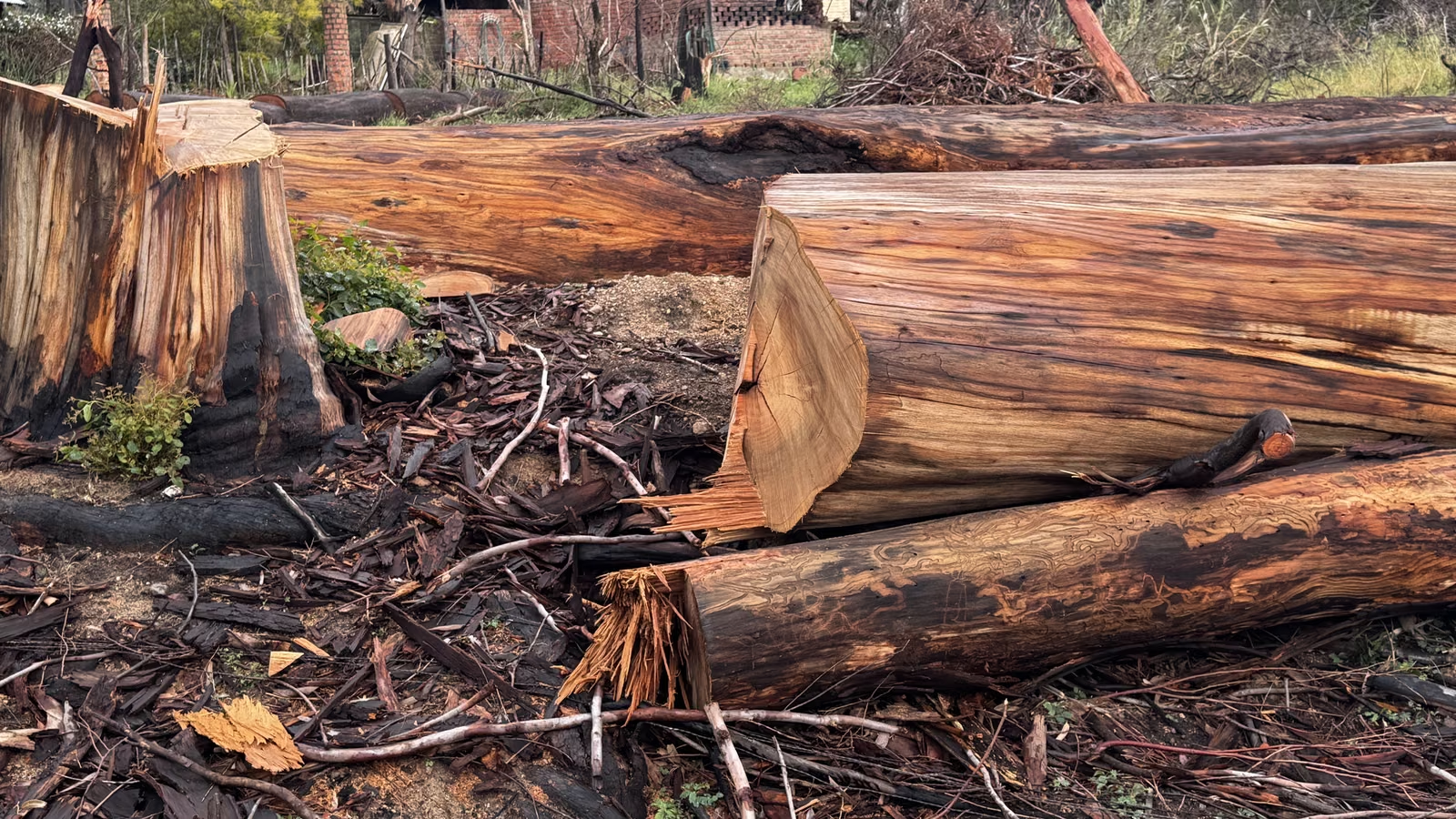
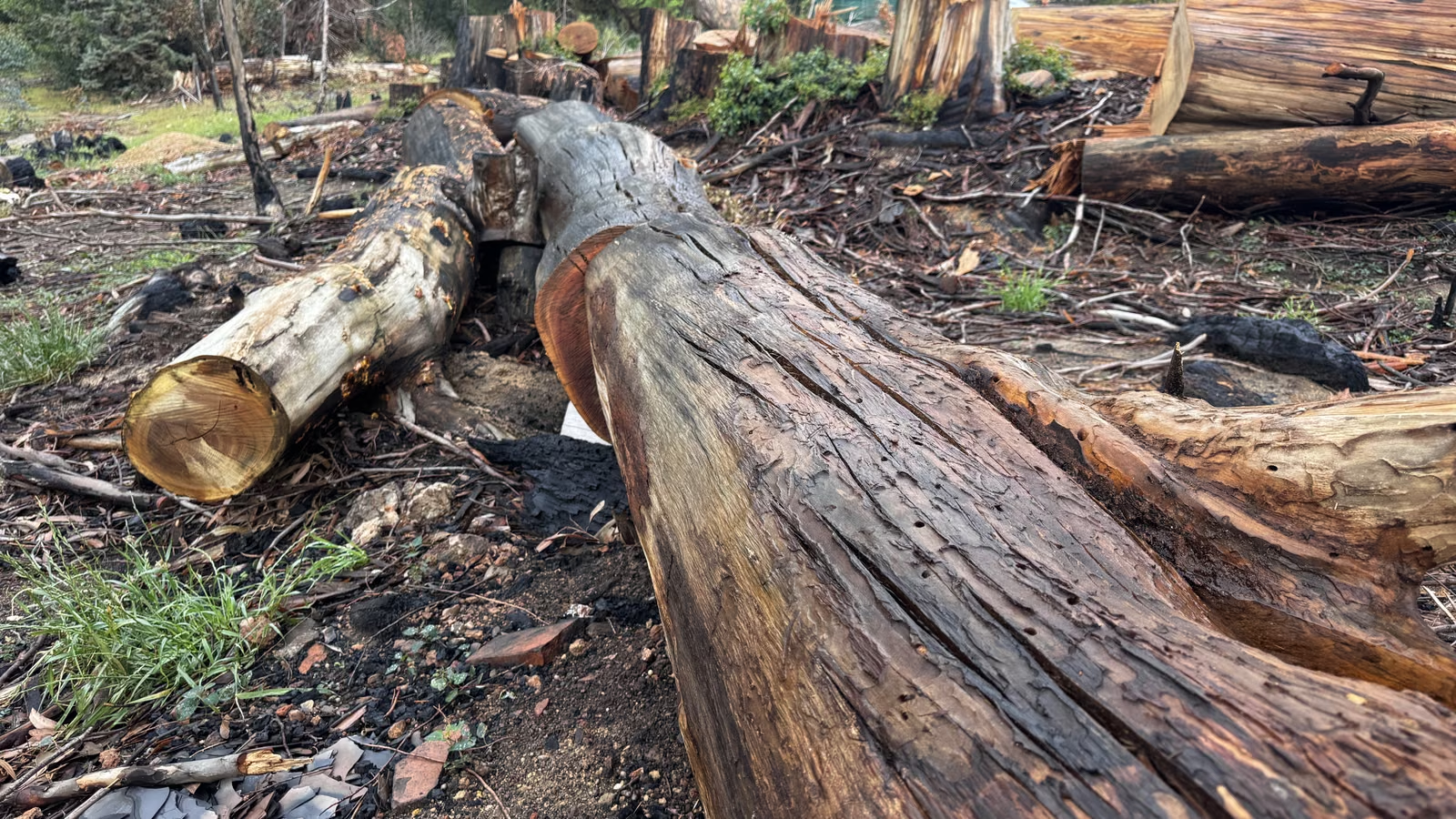
The banks of our river were heavily invaded by alien plants — Port Jackson willow, Acacia species and kikuyu grass, among others. These species are water thieves. They establish dense root systems along stream banks, intercept rainfall and intercept groundwater before it can recharge the system. In a wet season they look lush and green. In a dry season they've consumed the buffer that would otherwise carry the river through.
We've been systematically clearing alien vegetation from our riparian zone. This isn't a single event — aliens regrow from rootstock and seed, and the clearing programme requires follow-up seasons to be effective. We're in it for the long term.
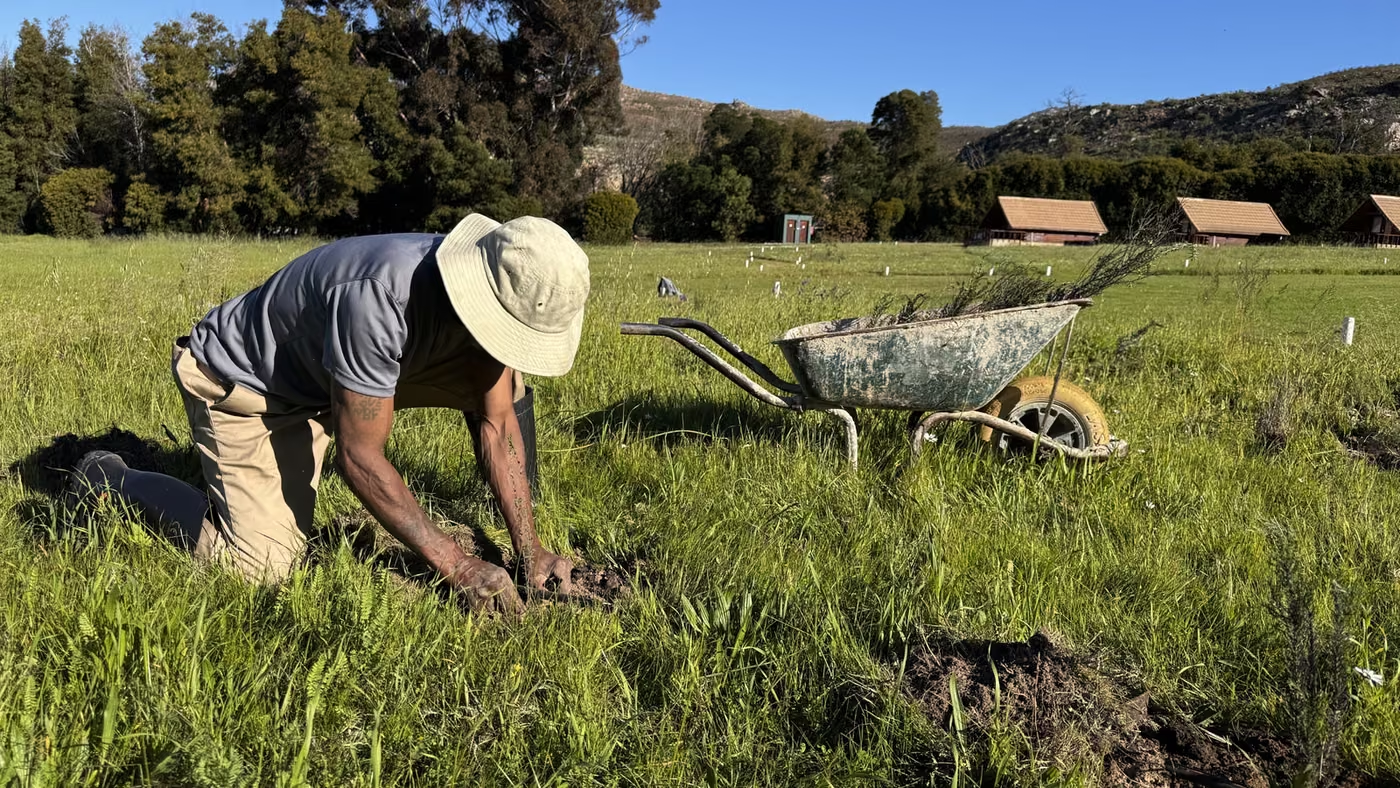
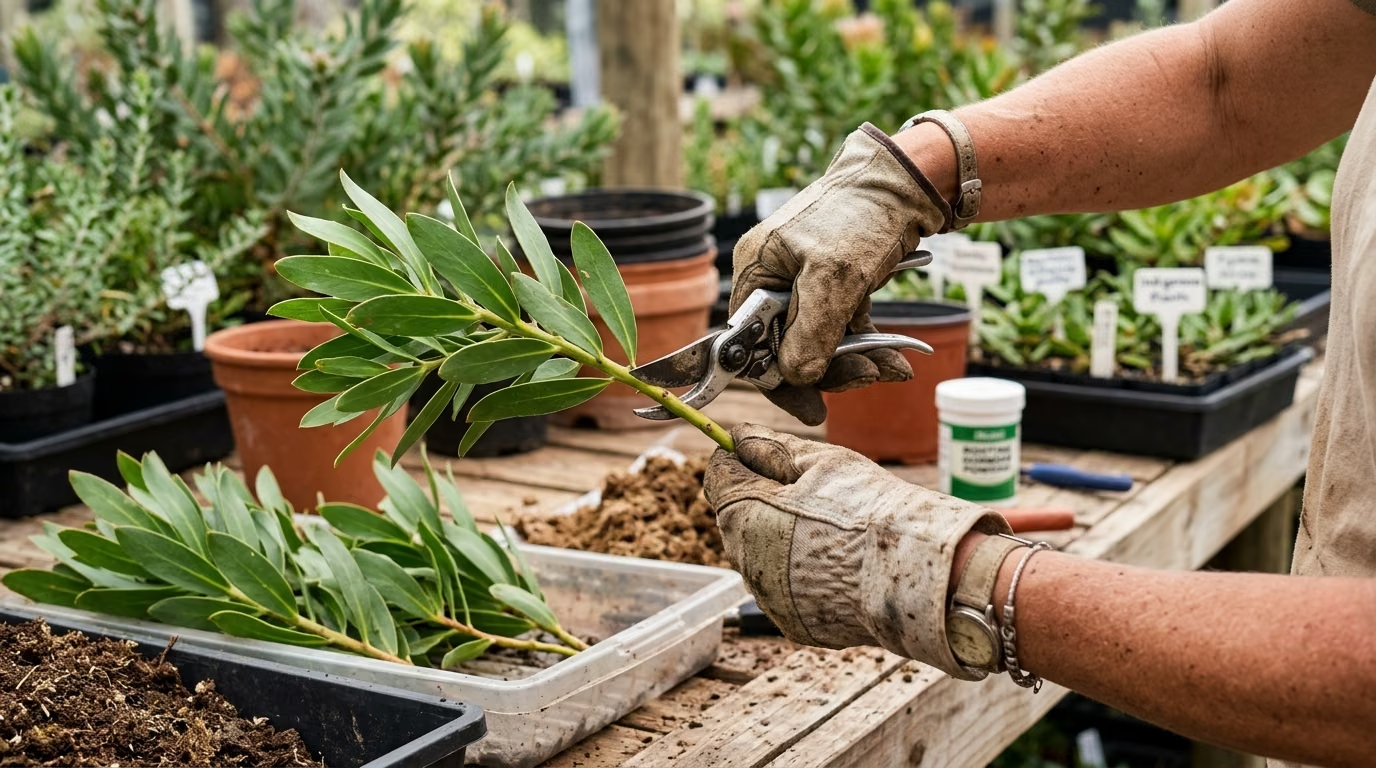
Cleared ground doesn't stay cleared — it gets recolonised, often by the same invasive species. The most effective follow-up is to establish indigenous vegetation quickly, to outcompete the regrowth. We're replanting with indigenous riparian species: Cape Reed, Cape Willow, various sedges and bulrushes. These are the plants that naturally occur in healthy Western Cape stream banks. They stabilise the soil, slow flood events, filter runoff and provide habitat for the bird and amphibian species that depend on healthy riparian corridors.
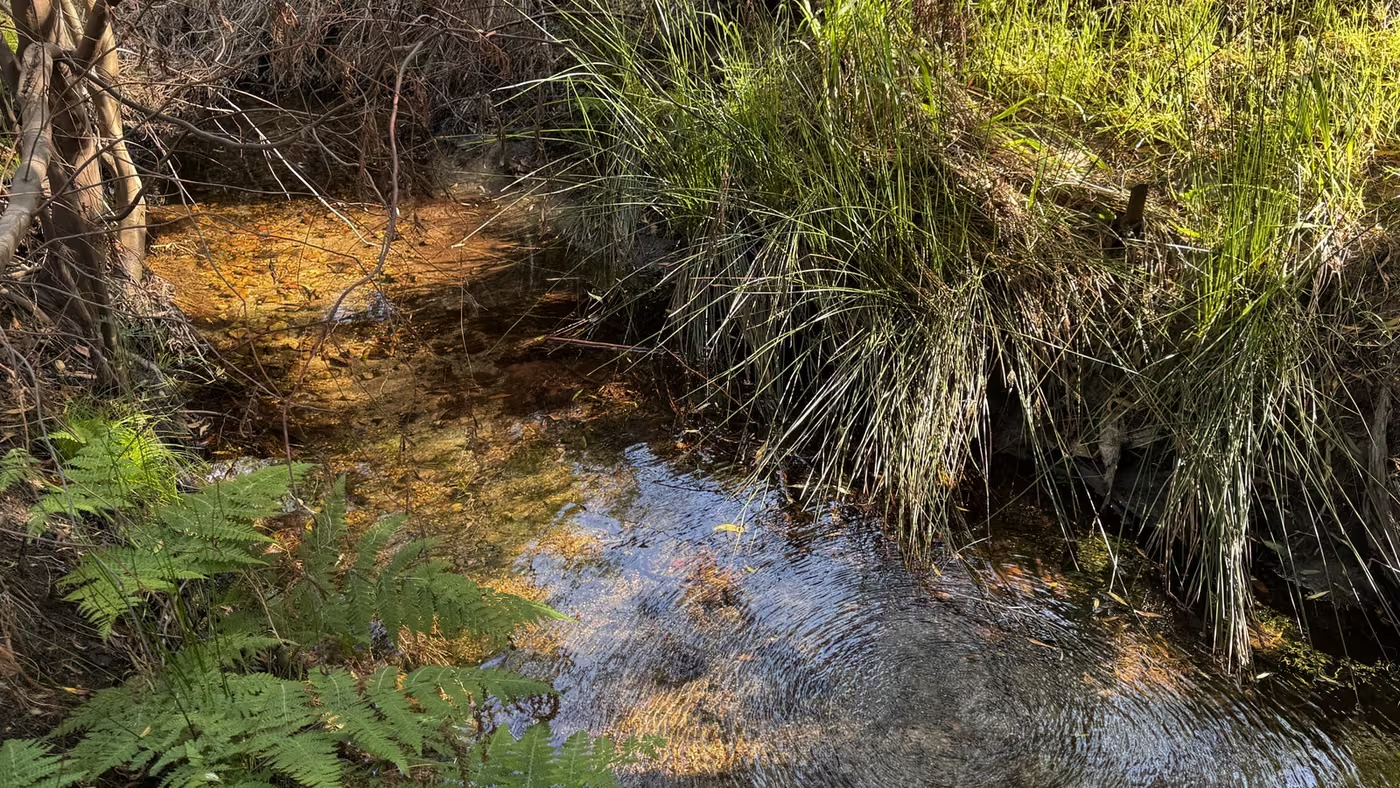
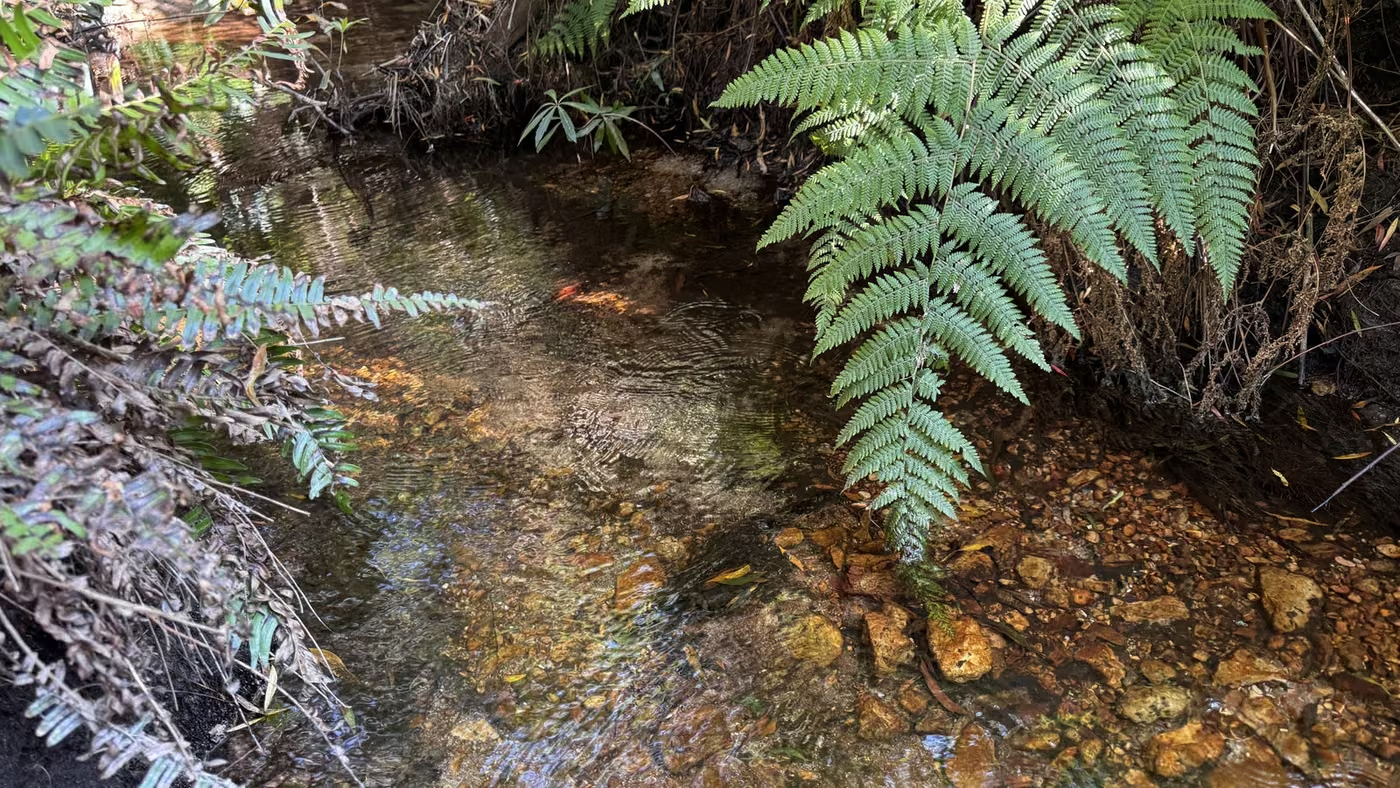
We're monitoring stream flow and water clarity on our stretch of river. The connection is direct: as alien plants are removed and indigenous vegetation is established, stream flow should increase and stabilise. We're tracking this over seasons and years. It's slow work — nature doesn't recover on a quarterly reporting cycle — but the changes are becoming visible. The river is running clearer. The dry-season flow is more sustained than it was.
Waterval's property sits on the boundary of a 700-hectare fynbos nature reserve. The stream that runs through our land doesn't stop at our fence — it continues through the reserve, feeding its water systems and supporting the biodiversity that depends on them.
This means that what we do on our 300 metres of river bank has a measurable effect on the reserve beyond it. Alien plants we remove on our property can't seed downstream into the reserve. Indigenous vegetation we establish on our banks creates a continuous riparian corridor that connects our land to the reserve's ecosystem.
We're not the reserve's manager. But we are its upstream neighbour. And upstream neighbours have a responsibility that's easy to ignore and impossible to outsource.
You don't need to own a farm or border a nature reserve to take responsibility for water and land. The Cape Floristic Region — one of the world's most biodiverse places — is made up of thousands of individual properties, farms, gardens and public spaces. Each one either adds to its health or subtracts from it.
The homeowner who removes invasive plants from their garden and plants indigenous species is doing the same work we're doing, at a different scale. The farmer who protects the stream that crosses their land is making the same choice we've made. The municipality that maintains riparian buffers in its parks is part of the same effort.
The Western Cape's water future will be decided by thousands of these individual choices, accumulated over decades. The work is not glamorous and the results are not immediate. But the legacy — water in the river, fynbos on the hillside, a valley that's still habitable and still beautiful in 50 years — belongs to everyone who did their part.
Port Jackson, Rooikrans, Hakea, pine and wattle are the most common invaders in the Western Cape. Identify and remove them from your property.
Replace removed aliens with indigenous fynbos, restios or riparian species. The Tulbagh Nursery stocks an excellent range of local species.
If a stream crosses your property, the vegetation on its banks is critical. Keep it intact, remove aliens, and never clear right to the water's edge.
Every litre captured from your roof during winter rain is a litre that doesn't need to come from a dam in summer. JoJo tanks are a direct investment in your own resilience.
iNaturalist is free. Walking your property and recording what you find creates a baseline — you can't track recovery if you don't know what you started with.
The fynbos we're planting now will reach maturity in 10 to 15 years. The riparian corridor we're restoring will stabilise and diversify over decades. The alien plant seeds in the soil bank will keep germinating for years and will require sustained management. None of this operates on a human timeline of annual results and quarterly reviews.
What we're building is a piece of landscape that will still be healthy, still be watered, still be biodiverse when the next generation inherits it. That's the only metric that matters to us: whether the people who come after us — the children of current guests, the next operators of this lodge, the valley's future communities — find the land in better shape than we did.
Guests at Waterval don't just stay near the work. They can be part of it.
A guided walk along our restored river bank. See the cleared zones, the replanting areas and the areas where recovery is visible. An honest account of where we are in the process — including what's still not right.
All guests · Guided · 45 minWork alongside our team on a half-day of active restoration — alien clearing, planting or monitoring. Available for team building groups, school camps and private guests who want to contribute directly.
Groups & individuals · By arrangementThe 45-minute trail to the Waterval waterfall passes through the fynbos on our property and into the bordering nature reserve. The best way to understand the landscape connection between our land and the reserve.
All guests · Self-guided or guidedOur school camp environmental education programmes include field sessions on the river — water cycle, riparian ecology, invasive species identification and what restoration actually involves.
School groups · CAPS aligned · GuidedWhether you're planning a conference, team building day, school camp or private stay — the land and its story are always part of what you're booking.
"The river doesn't care about your quarterly report. It cares whether you showed up."